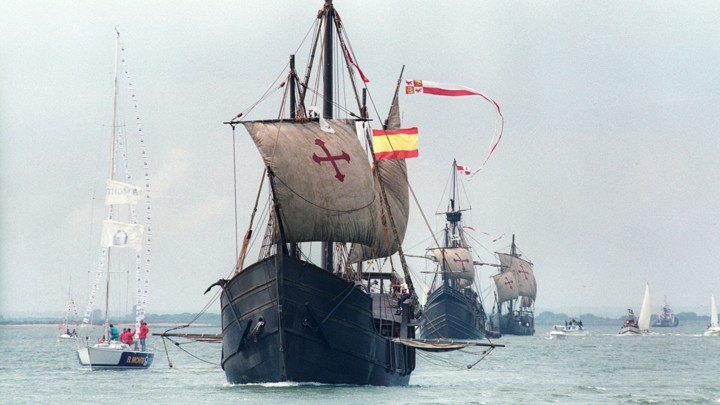
Link: Columbian Exchange
I selected this article for class and for the blog because
it reframed the Columbian Exchange in biohistorical terms, something that was
new to me and that I was intrigued by. The article identifies the 16th
century as a watershed moment in global agricultural practices due to the
movement of plants and animals during the age of exploration. While the article
addresses the devastating effects of the movement of diseases during this same
period, the authors focus on the less-discussed transformations of global
landscapes due to the movement of various species of plants and animals to
non-native terrains. They compare the age of European exploration and discovery
to the global technological revolution that took place in the 19th
and 20th centuries with new travel technologies, suggesting a type of reversal of continental drift through modern travel technology. This article still feels problematically Eurocentric to me, as we know there were Chinese explorers and Arab explorers around the same time, and this particular focus on the West seems limited. However, the age of the discovery and the Atlantic slave trade that would ensue altered the Americas (and Europe and Africa) in every way imaginable, and this article foregrounds some new ways to think about biodiversity and the profound impact of the Columbian Exchange.
Questions: While we discussed this in some depth in class,
how does reframing the Columbian moment (that has typically been discussed in
terms of encounters of human civilizations) as one that also transformed
landscapes all over the globe transform your own thinking about the encounter?
Comments
Post a Comment