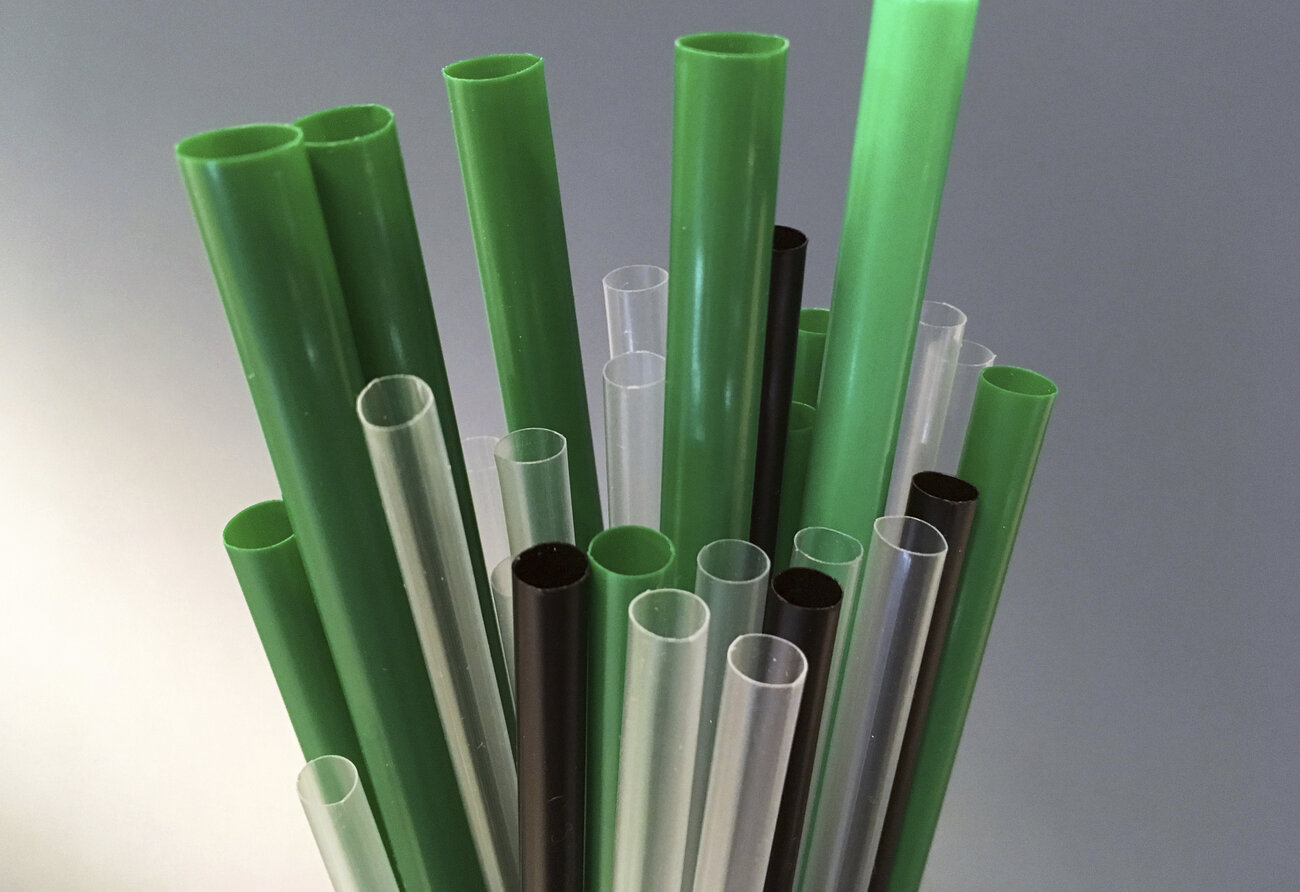
I chose this article/podcast for the blog because the movement behind banning plastic straws really took off this past summer. This article addresses the fact a large number of food service companies have already made the decision to ban plastic straws. There is no real need for straws other than we just use them because they are on the table. Many vendors and restaurants will not provide plastic straws unless requested upon by the individual. Since some people still like the idea of straws, some restaurants are moving to alternatives such as paper straws. By moving toward the alternative idea or banning straws completely, this would eliminate tons of plastic that generally is not recycled. In this also mentions a video of a sea turtle with a straw stuck in its nose that went viral in 2015, so I provided the link to the video.
https://www.youtube.com/watch?v=4wH878t78bw
Questions:
1. Do you think the United States as a whole should move towards banning plastic straws and find alternatives to this issue?
2. If so, what alternatives?
Questions:
1. Do you think the United States as a whole should move towards banning plastic straws and find alternatives to this issue?
2. If so, what alternatives?
After focusing in class on the natural disaster of hurricane Katrina, I think this article does a good job of bringing the focus back to how man-made disasters can also be devastating. The example the article brought up of the sea turtle with a straw in its nose showed how detrimental this problem is to the environment. Overall, I think the movement banning plastic straws is a step in the right direction to fixing this problem.
ReplyDeleteAs for alternatives to plastic straws, I’m not sure what other options there are other than paper straws or straws made of organic material. However, I think this issue isn’t just limited to the use of plastic straws. Of course, we can do our part by trying to eliminate the use of plastic straw waste, but the real issue is the large amount of corporate waste. I do believe that we are working toward a better solution and being a diligent consumer is part of this solution, but I think the real responsibility lies on large corporations.
I agree with Paige's points a lot. This is definitely a step towards an improved position in terms of environmental care, but the reality is that straws only make up 4% of plastic trash by piece, and around 2,000 tons out of 9 mil tons of plastic waste. I definitely think this focus should, and hopefully will be, expanded on to also consider the products mentioned in Marilyn's (I think she posted it) article on European bans of single use plastics. Things like plastic utensils, plates, grocery bags, to go cups/boxes, and etc should also be included in this movement towards reducing our contamination of the ocean, and ultimately impact on marine biodiversity.
DeleteThis article was very interesting and eye opening. The statistic that in 2014 Americans tossed out about 33 million tons of plastic is truly astonishing. The movement away from plastic straws will allow us to move one step closer to become more environmentally friendly. The idea that people throw out plastic straws so frequently shows Rachel Carson’s point that people are often not concerned with something if it is not their own problem, so they do not see how what they are doing affects the larger whole. The various alternatives that people are coming up with to replace plastic straws is really fascinating, such as the restaurant that is using pasta. I think that the United States should move towards banning plastic straws and find some alternatives, like possibly having restaurants sell metal, reusable straws or providing paper straws. Also, the video of the sea turtle was extremely sad, and shows the effects we are having on the environment around us and that we need to move towards become more environmentally conscious.
ReplyDeleteMy greatest concern with the movement to ban plastic straws in the United States is that it shifts focus away from the vast amounts of additional plastic waste that is produced each year. Even if every single plastic straw were to somehow miraculously disappear, it would be just a drop in the bucket compared to the sheer quantity of plastic bottles and bags that circulate the planet’s oceans today. While I commend the initiative behind the people advocating for the restriction of plastic straws, doing so would be nothing more than a band-aid solution to a far greater systemic problem. Ideally, a phasing out of all single-use plastic products over a set period would be done instead. Needless to say however, such a motion would require near universal consensus and herculean effort: two things that the United States is in short supply of when it comes to environmental issues.
ReplyDeleteI agree that focusing on straws can be seen as an "I'm doing good for the environment by refusing a straw" cop-out (while drinking from a disposable cup with a bag of takeout). But I guess the US has to start somewhere. I HATE IT when servers (ie restaurant policy) automatically insert straws into drinks. Most people would probably forget about them if they weren't automatically given to us. After all, who uses straws at home?? I've heard the excuse of "well I just worry that the cup isn't clean." Okay well then I guess you should bring your own plates and silverware to the restaurant too.
ReplyDeleteI think the previous commenters on this post have made a lot of good points. Although I can see how banning plastic straws would only account for a very small percentage of the total plastic waste we produce, I think it could potentially start a shift in mindset and awareness towards the use of all plastics if this information is relayed to more people in an effective way. I definitely think we should ban straws because it is a good place to start, and they are almost completely unnecessary. People have been conditioned to expect/want them but that is not a good reason to keep them around, especially when they are so detrimental to the environment. If people are so adamant about needing straws for their drinks, they can purchase their own metal straws to bring with them.
ReplyDeleteThere is an issue around banning straws, and that is because it is an ableist move. People who are disabled actually commonly need straws to be able to drink. Declaring that they need to provide their own is not fair to them, because someone in an abled body would not face the same issues. Sort of an equity, not equality mindset. I agree that straws are a waste of plastic, but I also think the movement around straws is useless, and just affluent people's method to feel like they are making an impact on helping the environment. In the grand scheme of things, these straws are not an issues, and the companies who are pushing everyone to get rid of straws, are hiding behind that campaign because most of them are apart of the major causes for pollution. Yes, straws hurt the environment because they feed pollution, but looking at statistics getting rid of straws affects less than 1% of the issues. Instead of feeding a movement that chastises disabled people, and inflates the egos of rich people who could do much more to make a difference, choose to put energy into things that could actually make a big difference before its too late. We have a limited time frame to fix what we (as a human species) have created, and backing something that is so minuscule in the grand scheme of things is not what we need to do with our time.
ReplyDeleteI think a plastic straw ban would be fine. Most drinks are still drinkable without straws, and the ones that aren't can just come with recyclable paper straws. Additionally, people who really like straws can just buy a reusable straw made of a more durable plastic or even metal. I do wonder how much straws actually contribute to landfills and pollution and such. If it isn't that much, there's an argument to be made that there's not enough being done by banning plastic straws and that it would be a waste of time. The flipside to that is, of course, that every bit helps and that it's a start. Alternatives include no straws, recyclable straws, and reusable straws. Also as a last-ditch effort we can all band together and use Camelbacks instead of cups, but let's not let it get that far.
ReplyDelete